
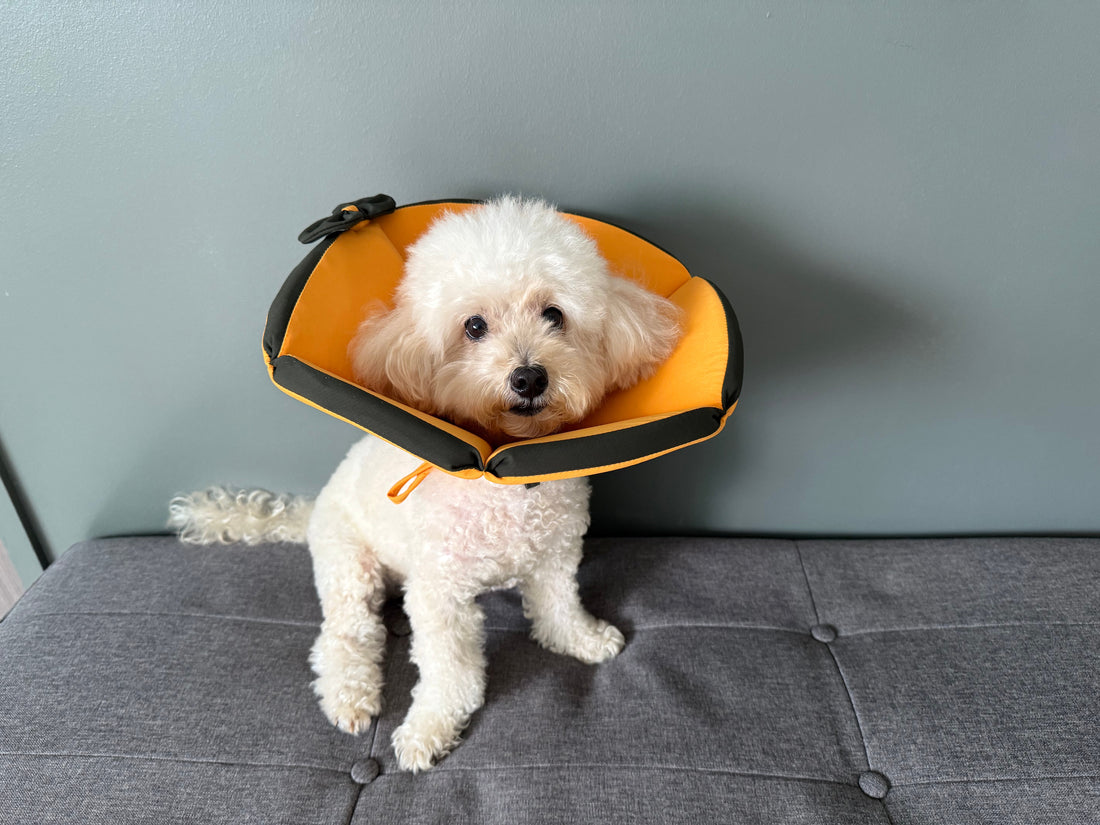
If your dog just got neutered, or that hot spot finally got treated, you already know the drill. The vet hands you a plastic cone, and within the hour it's knocked over the water bowl, scraped a good chunk of paint off the wall, and your dog is giving you a look that says this is somehow your fault.
We've all been there. Turns out there's a comfier way to do this.
Soft vs Plastic: What's Actually Different
Not much, functionally. Both stop your dog from licking or biting a wound, which is the whole point. The difference is what they're made of. A soft cone is padded fabric that flexes. A plastic one is rigid and doesn't budge for anything, including doorframes, table legs, or your shins.
That rigidity is exactly why plastic cones work so well, and exactly why dogs seem to despise them. Side vision's basically gone, the edges can feel surprisingly sharp against the neck more often than not, and every bump sends this loud crack through the house.
Does It Actually Stop the Licking?
Yes, as long as it fits properly. A soft cone sized right still fully blocks the wound, it just does it without turning your living room into an obstacle course. The trick is length: it needs to reach just past the nose. Any shorter, and a determined dog will find a way around it, cone or no cone.
Why Pawrents Keep Saying "We're Never Going Back to Plastic"
A few reasons come up again and again:
- Soft enough that dogs actually settle down and sleep in it, which matters more for healing than anything else
- Flexes instead of smashing into things, and no sharp edges digging in
- Most fold back a bit at feeding time, so meals aren't a whole production
- Machine washable, and you'll be glad of that by day four of a two-week recovery
Okay, But Plastic Isn't Useless
Worth saying plainly: sometimes plastic is genuinely the right call. If your dog's a particularly stubborn licker, or the wound's somewhere awkward, your vet might specifically want the rigid version. Go with whatever they recommend for the actual procedure. Soft is the better default for most everyday recoveries, not a total replacement.
Sizing, So You're Not Guessing
The best way to size a cone is by neck girth, actually measure around the base of your dog's neck where the collar sits. Weight's a decent backup if you don't have a tape measure handy, but girth is what actually tells you whether it'll stay snug.
Stuck between two sizes? Go up. The cone fastens with a big velcro strap, so there's real room to adjust, just loosen it a notch to fit a girthier neck comfortably. (Our Soft Pet Recovery Cone runs a few sizes and colours, if you end up needing one.)
However the week goes, hope it's a smooth one and your fur baby's back to full zoomies soon.


